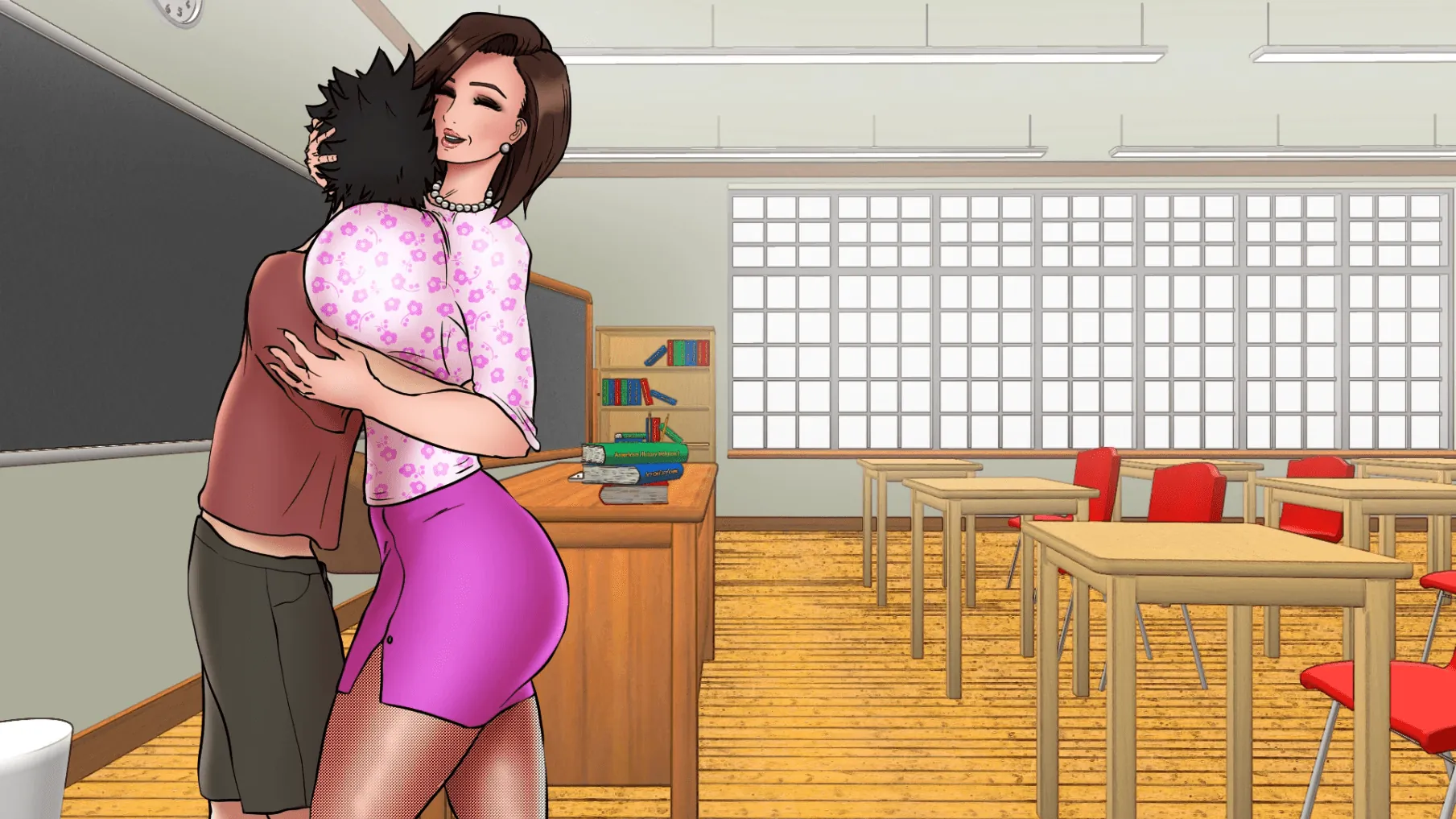
Friends in Need
Play Friends in Need
Friends in Need Screenshots

























Friends in Need review
In-depth walkthrough, choices, and tips for Friends in Need by NeonGhosts
Friends in Need is a choice-driven adult visual novel by NeonGhosts that blends branching narrative, relationship systems, and multiple moral paths. This guide focuses solely on Friends in Need and delivers a practical walkthrough, choice analysis, and optimization tips so you can shape the story and character outcomes intentionally. Whether you want to pursue particular relationship arcs, unlock specific scenes, or avoid unwanted paths, this article gives clear, tested strategies and personal insights drawn from extended play-throughs.
Core mechanics and how choices shape the story
Ever felt like you’re just clicking through dialogue in a visual novel, only to get slapped with an ending that feels totally out of left field? 😅 In Friends in Need, that’s literally the point. Every single choice whispers to the game’s hidden machinery, and understanding this conversation is the key to unlocking the story you actually want to experience. This isn’t a game where you can just be “nice” and win; it’s a delicate, often tense balancing act of emotions and morality. Let’s pull back the curtain on the core Friends in Need mechanics that transform your casual clicks into a powerful narrative engine.
The magic—and the tension—of this game lives and dies by its systems. Getting to know them isn’t cheating; it’s learning the language the story speaks. 🗣️➡️🎭
How the relationship system works in Friends in Need
At its heart, the relationship system Friends in Need uses isn’t just one bar labeled “Friendship.” Think of it as a series of emotional dials for each character, each measuring a different aspect of their current state and their perception of you. The main dials you need to watch are Happiness, Reluctance, and the infamous Dark Points.
Happiness is the most straightforward. It measures a character’s immediate comfort and positive feelings. Offering genuine help, giving thoughtful gifts, or choosing supportive dialogue typically raises this. High Happiness opens up warmer conversations, makes characters more receptive to your suggestions, and is absolutely vital for pursuing the more positive, connecting conclusions.
Reluctance is the interesting counterweight. It represents a character’s wariness, their personal boundaries, and their instinct for self-preservation. Sometimes, actions that boost Happiness also lower Reluctance (like respecting their space). But often, they’re in opposition. Being overly pushy, prying into sensitive topics too early, or using certain dialogue options that feel manipulative will cause Reluctance to spike. If a character’s Reluctance gets too high, they’ll shut down, refusing to share information or participate in key scenes, effectively locking you out of their route.
Then there are the Dark Points. This is a global meter tied to you, the protagonist. It doesn’t belong to any one character; it’s a measure of your own descent into coercive, threatening, or outright violent behavior. The relationship system Friends in Need employs is clever because these points often work in the shadows. You might choose a dialogue option that seems “firm” or “practical,” and it quietly adds a Dark Point. These points are the key that unlocks—or more accurately, unlocks the door to—the game’s darker narrative branches.
The genius is in the interplay. A character might have low Happiness and high Reluctance, putting them in a vulnerable state where certain dark choices become available. Or, high Happiness might make them overlook a minor transgression, but your growing pool of Dark Points changes the context of future interactions. It’s a constantly shifting emotional landscape.
Points and morality: Dark, Reluctance, Happiness and more
Let’s break down these meters a bit more. Remember, these are largely hidden in a first playthrough, which is why a smart save strategy Friends in Need is non-negotiable.
- Dark Points: Your moral compass. Earning these points steers the story toward manipulation, extortion, and violence. They are notoriously “sticky”—incredibly easy to gain and very, very hard to lose. A single playthrough can only tolerate a few before you’re nudged onto a darker path. Think of them as corrosion on your character’s soul; it builds up quietly until the structure fails. To avoid violent path Friends in Need, monitoring your implicit accumulation of these is job number one.
- Happiness: The sunshine meter. 💖 Raises easily with kindness, patience, and genuine aid. However, it can also be falsely inflated through manipulation (which usually comes with a side of Dark Points). True, route-unlocking Happiness is built on consistently positive, non-coercive choices.
- Reluctance: The shield meter. 🛡️ Lowering this is about proving you’re safe. It involves consistency, respecting “no” or “not now,” and avoiding pressure tactics. High Reluctance is a major roadblock for all routes.
- Scene Flags: This is the behind-the-scenes magic. Scene flags Friends in Need are binary switches (TRUE/FALSE) that get flipped based on specific actions. Did you record the incriminating conversation in Chapter 2?
FLAG: EVIDENCE_RECORDED = TRUE. Did you threaten to expose someone in Chapter 4?FLAG: EXTORTION_PATH_STARTED = TRUE. These flags don’t just alter dialogue; they determine which scenes load later in the game. They are the ultimate gatekeepers for endings.
To see how this works in practice, here’s a quick guide to how common actions ripple through the system:
| Player Action | Primary Meter Change | Possible Flag Set / Permanence |
|---|---|---|
| Listen patiently to a character’s problem without offering unsolicited advice. | Happiness (+), Reluctance (-) | None. A safe, positive choice. |
| Secretly record a private, emotional confession. | Dark Points (+) | EVIDENCE_RECORDED = TRUE (Permanent. Irreversible). |
| Use the recorded confession to apply pressure in a later conversation. | Dark Points (++), Reluctance (+++) | EXTORTION_PATH_ACTIVE = TRUE (Locks out positive routes). |
| Choose a physically aggressive option during a confrontation (e.g., “Shove them against the wall”). | Dark Points (+++), Happiness (–), Reluctance (++++) | ASSAULT_PATH_TRIGGERED = TRUE (Immediately branches story toward violent outcomes). |
| Cover for a character’s mistake with a white lie to an authority figure. | Happiness (++), Reluctance (-) | CHARACTER_TRUST_BOOST = TRUE (Opens new, kinder dialogue later). |
How early choices affect late-game routes
Here’s where NeonGhosts shows their mastery. Friends in Need is a masterpiece of consequential design. A choice in Chapter 1 can slam shut a door in Chapter 5, and you might not even hear the boom. The Friends in Need mechanics are built on this long-term causality.
Let me hit you with a personal horror story from my first blind playthrough. 🎮 I was trying for a positive resolution with Alex. In Chapter 1, during a heated moment of frustration, I chose the dialogue option “Don’t make me regret helping you.” It felt stern, maybe a little harsh, but fair in the context. The game didn’t flash a “DARK POINT +1” on screen. Alex’s reaction was subtly colder, but the story moved on. Fast forward to Chapter 4, the pivotal romantic confession scene… and it simply didn’t trigger. Instead, I got a scene about uneasy loyalty. I was baffled! Upon reloading and checking a guide (and my own pride 😤), I learned that single, early line of dialogue had quietly added Dark Points and set a FLAG: DOMINANT_TONE = TRUE. That flag, combined with my point total, permanently altered Alex’s perception of me, blocking the vulnerable, romantic route. My “early impulsive choice closed a preferred route.” The fix? A reloaded save from the end of Chapter 1. This is the very definition of why you need a solid save strategy Friends in Need.
Practical Route Guidance:
-
For Romantic/Positive Arcs: Your mantra is “Patience and Respect.” 🕊️
- Always choose comforting, patient, or humorous dialogue over firm, demanding, or sarcastic options.
- Never take the explicit choice to record, photograph, or gather compromising information. This is the single biggest trap.
- Gifts should be small, thoughtful, and without strings attached.
- If a conversation topic is marked as “Sensitive” or “Private,” back off immediately if asked to. Lowering Reluctance is more important than forcing a Happiness boost.
-
For Manipulation/Extortion Arcs: You’re walking a tightrope. 🤡
- You must actively seek out and trigger the “evidence gathering” scene flags Friends in Need.
- Dialogue choices should lean toward “practical,” “observant,” or with subtle double meanings. Avoid outright kindness.
- You’ll need to balance applying pressure (raising Reluctance, adding Dark Points) with occasional false kindness to keep characters from breaking entirely.
- This path is full of points of no return. Once you explicitly use your leverage (
EXTORTION_PATH_STARTED), the温馨 (warm) routes are gone.
-
To Avoid Maxing Dark Points: Be hyper-vigilant about wording. 🧐
- Words like “should,” “must,” “make you,” and “consequences” are often red flags.
- Opt for “could we,” “maybe,” “I’m here if,” and open-ended questions.
- When frustrated, pick the “Sigh and change the subject” option over the “Confront” option. Disengaging is almost always safer.
- To avoid violent path Friends in Need, treat any physical-action choice (shove, grab, block exit) as a nuclear option. It will almost always set a permanent, branching flag.
Save Like Your Sanity Depends On It (It Does):
This is the most crucial save strategy Friends in Need advice I can give: MANUAL SAVE, OFTEN, IN MULTIPLE SLOTS.
- The Chapter Save: At the start of every new chapter, save in a dedicated slot (e.g., “CH2 Start”).
- The Branch Save: Before any major decision that feels tense, or before entering a character’s personal space for a key conversation, create a new save. I label these “Pre Alex Confrontation” or “Before Roof Choice.”
- The Milestone Save: After completing a chapter in a way you’re happy with, save in a “Clean” slot. This is your fallback if later experiments go wrong.
- How many? I recommend keeping at least 10-15 active manual saves, cycling the oldest as you progress. The game’s autosave is a trap—it gets overwritten constantly.
Platform & Final Safety Notes: 🖥️
The core Friends in Need mechanics and flag system are identical across Windows, Mac, Linux, and Android. The only difference is save file location. On PC, you can often manually back up your save folder for ultimate security!
Finally, a crucial reader safety note: This game explores heavy themes. The systems we’ve discussed are your control panel. If you want to avoid violent path Friends in Need, you now know the dangerous levers. Irreversible flags are most commonly triggered by: 1) The explicit act of recording evidence, 2) Making a direct threat of exposure or blackmail, 3) Choosing a physical assault action. See those coming, and you can steer clear. Your choices write the story, but with an understanding of the relationship system, the points, and the flags, you’re no longer writing in the dark. You’re holding the pen with purpose. ✍️
This guide equips you to play Friends in Need with intention: understand the mechanics, manage relationships, and make choice sequences that lead to the outcomes you want. Use the save strategies and chapter walkthrough to avoid irreversible paths, and refer to the character guides when prioritizing arcs. Try the sample builds and the step-by-step pivotal choices list if you want to replay with a specific goal. If you enjoyed this guide, save the recommended slots, experiment with one different choice per replay, and share your favorite route in community discussions.